
 English
 العربية
 azərbaycan dili
 বাংলা
বাংলা Français
 Deutsch
 Indonesia
 한국어
한국어 Melayu
 پارسی
پارسی Polski
 Português
 Română
 Русский
 Español
 Kiswahili
 ภาษาไทย
 Türkçe
 Українська
 اردو
اردو Tiếng Việt
Uso de extrator de cobre nos últimos anos, com avanços na tecnologia e crescentes regulamentações ambientais, os métodos de utilização de extratores de cobre evoluíram e melhoraram continuamente. É amplamente utilizado na fundição de metais, processamento de minério e proteção ambiental.
Abaixo estão alguns dos métodos mais recentes de utilização de extratores de cobre:
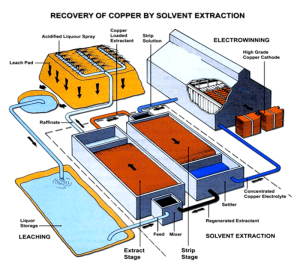
1. Otimização do Método de Extração por Solvente
Extratores de cobre modernos normalmente empregam métodos de extração com solvente, que incluem as seguintes estratégias de otimização:
- Extração seletiva: Novos extratores seletivos foram desenvolvidos para aumentar a seletividade para íons de cobre, reduzindo assim a coextração de outros metais, como chumbo e zinco.
- Extração em etapas: Ajustando a concentração do extratante e o valor do pH, a extração em etapas da solução pode ser realizada para melhorar as taxas de recuperação de cobre.
2. Abordagens de Química Verde
Com a crescente consciência da proteção ambiental, as aplicações da química verde na extração de cobre estão aumentando gradualmente:
- Extração Biológica: A utilização de microrganismos ou plantas específicas para extrair cobre de minérios é um método ecologicamente correto e sustentável. Alguns microrganismos podem absorver efetivamente íons de cobre e filtrar ou precipitar cobre em processos subsequentes.
- Extração sem solventes: Desenvolvimento de métodos de extração que não requerem solventes orgânicos, usando materiais sólidos (como resinas de troca iônica) para extrair diretamente cobre de soluções.
3. Pesquisa e Desenvolvimento de Novos Extratores
Os pesquisadores exploram continuamente novos tipos de extratores para aumentar a eficiência e a seletividade da extração:
- Nanomateriais: O uso de nanopartículas como extratantes aumenta significativamente a área de superfície e as taxas de reação, melhorando a eficiência da extração de íons de cobre.
- Materiais Funcionalizados: Ao introduzir grupos funcionais orgânicos em materiais inorgânicos, novos extratantes com funções específicas podem ser preparados.
4. Otimização das Condições do Processo
A otimização das condições do processo durante a extração de cobre também é crucial para melhorar a eficácia:
- Controle de temperatura e tempo de reação: Ajustando a temperatura operacional e o tempo de reação, a cinética da extração de cobre pode ser otimizada, aumentando a eficiência da extração.
- Ajuste da velocidade de agitação: Definir adequadamente a velocidade de agitação pode melhorar a eficiência de contato entre o extrator e os íons de cobre, acelerando assim a taxa de extração.
5. Monitoramento e Controle On-line
Modernas tecnologias de monitoramento online tornam o processo de extração de cobre mais eficiente e inteligente:
- Análise em tempo real: Usando sensores avançados e instrumentos analíticos para monitorar a concentração de cobre e outros parâmetros em tempo real, ajustando dinamicamente a quantidade de extrator e as condições do processo.
Conclusão do uso do extrator de cobre
Os métodos mais recentes de uso de extrator de cobre estão avançando em direção a maior eficiência, Amizade ambiental, e inteligência. Estes novos métodos não só melhoram as taxas de recuperação de cobre, mas também reduzem os impactos ambientais, fornecendo novas soluções para o uso sustentável dos recursos de cobre. Com pesquisas contínuas e avanços tecnológicos, o campo da extração de cobre verá mais inovações e avanços no futuro.
Nossos extratores de metal como abaixo, Se você precisar de algum tipo, por favor pergunte-nos:
- P204 (D2EHPA ou HDEHP) Isso é usado na primeira etapa para remover impurezas do minério de níquel laterítico.
- DY319 extrator de co-extração de níquel-cobalto de alta eficiência para reciclagem de bateria, pode retirar níquel e cobalto juntos do eletrólito da bateria de lítio.
- DY272 Extratante de separação de níquel cobalto, pode retirar o cobalto da solução de níquel-cobalto, então deixe níquel puro.
- DY988N/DY973N/DY902/DY5640 reagente de extração de solvente de cobre.
- P507 extrator de metais não ferrosos para cobre, zinco, cobalto-níquel, cádmio, ouro-prata, metais do grupo da platina, terras raras e assim por diante.
- DY377 eficiente extrator de separação de níquel e diamante.
- DY366 Extrator de escândio.
- DY316 Extrator de lítio.
- DY-SS-01 extrator de ferro, cálcio, cádmio e escândio em diferentes valores de pH.