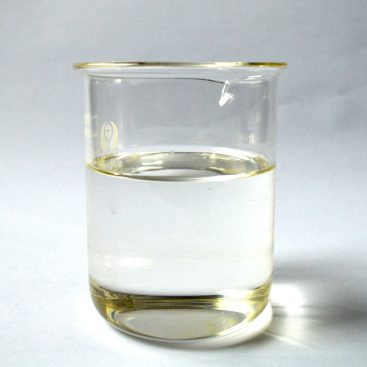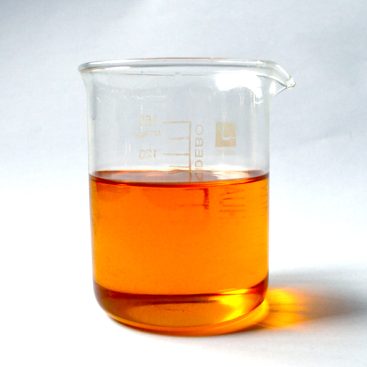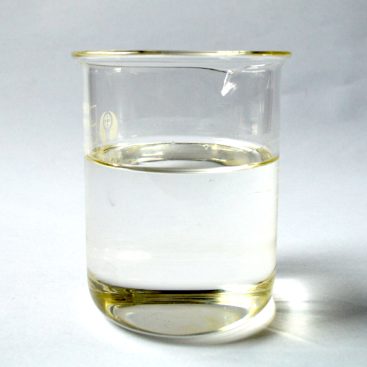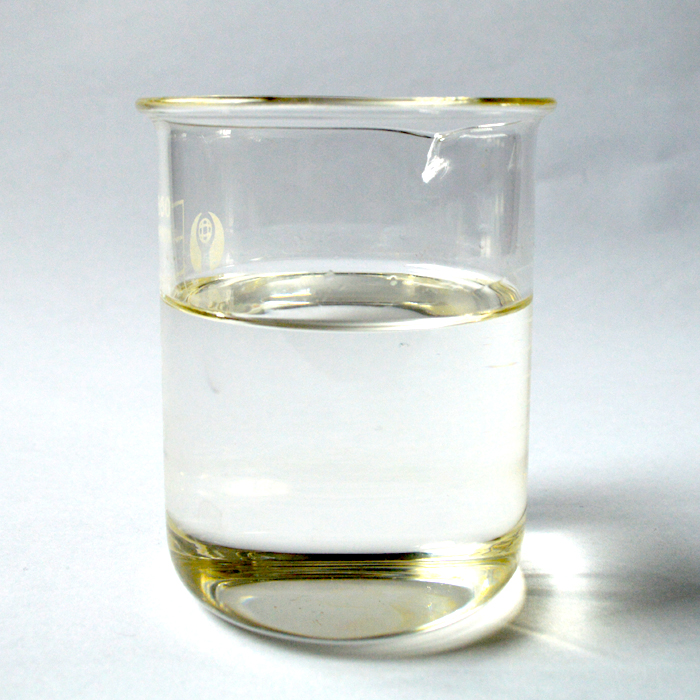
Bis(2,4,4-trimetilpentilo)El ácido fosfínico es un compuesto organofosforado con importantes aplicaciones en la investigación y la industria., particularmente como extractante y ligando.
Aquí hay una descripción general completa de sus especificaciones clave.:
CAS: 83411-71-6
CE No.: 280-445-7
Fórmula: C16H35O2P
mol. peso: 290.42
Concentración: ≥94%
número ONU: 3082
Clase de peligro de transporte: 9
grupo de embalaje: III
📋 Información General
Número CAS: Hay dos números CAS asociados con esta sustancia en la literatura.: 83411-71-6 y 27661-42-3.
Fórmula molecular: C₁₆H₃₅O₂P
Peso molecular: 290.42 g/mol
Sinónimos: Ácido diisooctilfosfínico, cianex 272, Ionquest 290.
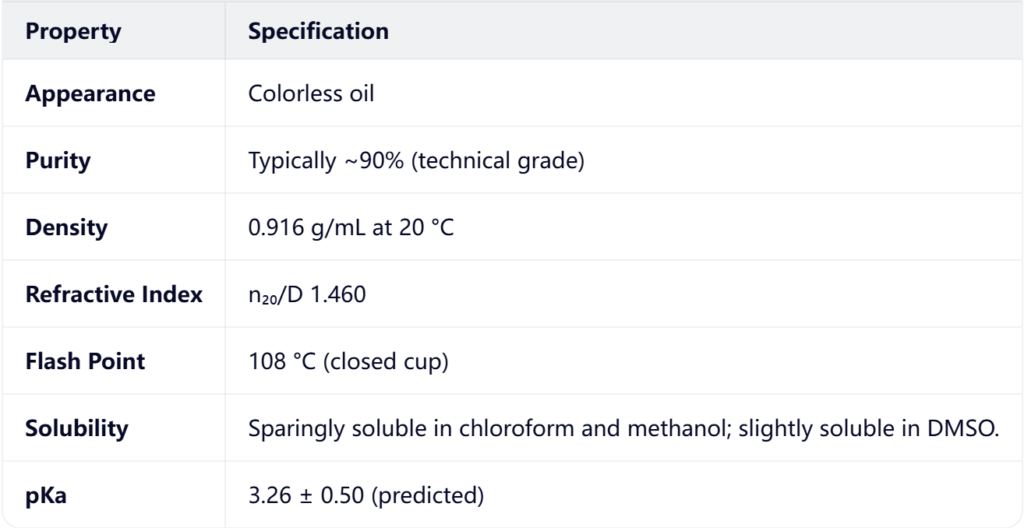
⚗️ Propiedades físicas y químicas
La siguiente tabla resume las propiedades físicas y químicas clave de Bis(2,4,4-trimetilpentilo)ácido fosfínico.
🧪 Aplicaciones
Bis(2,4,4-trimetilpentilo)El ácido fosfínico es un reactivo versátil utilizado en diversos campos especializados.:
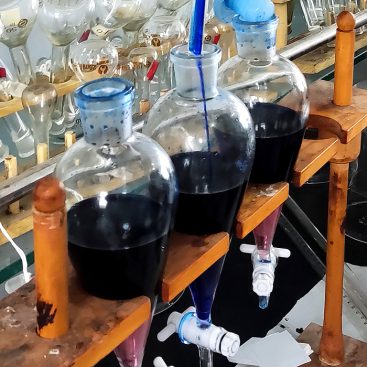
Extracción con solvente: Es ampliamente utilizado como extractante ácido para la separación y recuperación de iones metálicos., como el indio(III) y otros metales divalentes (p.ej., Zn²⁺, Cu²⁺, Pb²⁺).
Síntesis de nanomateriales: Sirve como ligando pasivador de superficies en la síntesis de “tamaño mágico” nanocristales, como CdSe y CdTe.
Extracción de fluidos supercríticos (SFE): El compuesto actúa como un ligando ácido para facilitar la extracción de metales de matrices como arena y cenizas volantes utilizando CO₂ supercrítico..
⚠️ Seguridad y Manejo
Al manipular este químico, es crucial seguir los protocolos de seguridad adecuados.
Clasificación de peligros: Está clasificado como irritante para los ojos. (Categoría 2).
Declaración de peligro: Provoca irritación ocular grave (H319).
Declaraciones de precaución:
Utilice guantes protectores y protección para los ojos/la cara..
SI EN LOS OJOS: Enjuague cuidadosamente con agua durante varios minutos.. Quitar lentes de contacto, si está presente y es fácil de hacer. Continuar enjuagando.
Almacenamiento: Almacenar a temperatura ambiente en un recipiente sellado.. Se considera un líquido combustible..
Nuestros extractantes de metales como se muestra a continuación, si necesitas algún tipo, por favor pregúntanos:
- P204 (D2EHPA o HDEHP) Esto se utiliza como primer paso para eliminar las impurezas del mineral de níquel laterita..
- DY319 Extractor de coextracción de níquel y cobalto de alta eficiencia para reciclaje de baterías, Puede extraer níquel y cobalto juntos del electrolito de la batería de litio..
- DY272 Extractor de separación de níquel y cobalto, Puede eliminar el cobalto de la solución de níquel-cobalto., luego deja níquel puro.
- DY988N/DY973N/DY902/DY5640 reactivo de extracción con solvente de cobre.
- P507 extractante de metales no ferrosos para cobre, zinc, cobalto-níquel, cadmio, oro plata, metales del grupo del platino, tierras raras y así sucesivamente.
- DY377 Extractor eficiente de separación de níquel y diamante..
- DY366 extractante de escandio.
- DY316 extractante de litio.
- DY-SS-01 extractante para hierro, calcio, cadmio y escandio a diferentes valores de pH.