 English
 العربية
 azərbaycan dili
 বাংলা
বাংলা Français
 Deutsch
 Indonesia
 한국어
한국어 Melayu
 پارسی
پارسی Polski
 Português
 Română
 Русский
 Español
 Kiswahili
 ภาษาไทย
 Türkçe
 Українська
 اردو
اردو Tiếng Việt
Extraction de terres rares (méthode d'extraction par solvant) est le processus industriel de base pour séparer et purifier les éléments des terres rares des minéraux mélangés. Il utilise la différence de coefficients de distribution des différents ions de terres rares dans les solvants organiques et les phases aqueuses inorganiques pour réaliser la séparation d'éléments de terres rares uniques de haute pureté.. Cette technologie a établi la position dominante de la Chine dans le domaine mondial de la fusion et de la séparation des terres rares..
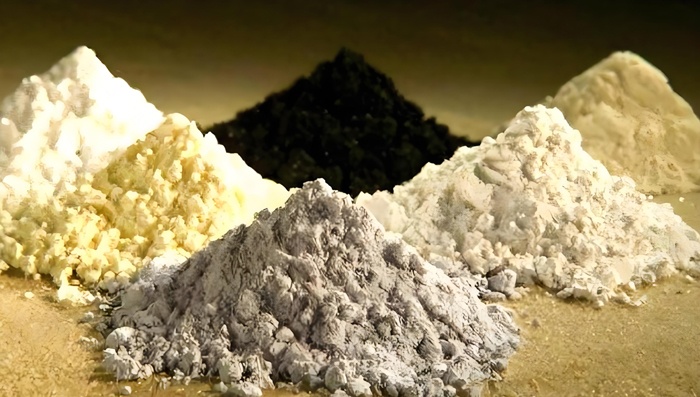
Ce qui suit est la structure de base du processus d'extraction des terres rares:
1. Principes et processus fondamentaux
Principe de base: Mélanger une solution acide (phase aqueuse) contenant plusieurs terres rares avec un extractant organique spécifique (phase organique) vigoureusement dans une caisse d'extraction. En raison des différences de propriétés chimiques des différents éléments des terres rares, ils passeront à la phase organique avec des affinités différentes.
Extraction à flux croisés/à contre-courant à plusieurs étages: En raison des propriétés extrêmement similaires entre les éléments des terres rares (éléments de lanthanides en particulier adjacents), extraction continue, la lessive, et une rétro-extraction à des centaines, voire des milliers de niveaux est nécessaire pour séparer un seul élément de terre rare jusqu'à une pureté allant jusqu'à 99.999%.
2. Extracteurs courants
Selon différents types de minéraux de terres rares et exigences d'extraction, les types suivants d'agents d'extraction organiques phosphorés ou aminés sont couramment utilisés dans l'industrie:
P204 (HDEHP): Extracteur acide, principalement utilisé pour la séparation des terres rares lourdes et l'extraction d'éléments tels que l'yttrium, samarium, europium, gadolinium, etc..
P507 (EHEHPA): Extracteur acide à haut coefficient de séparation, est actuellement le réactif principal pour séparer les terres rares légères (comme le lanthane, cérium, praséodyme, néodyme).
N235 (N1923): Extracteur alcalin/neutre, couramment utilisé pour séparer les terres rares légères ou extraire les éléments associés des systèmes d'acide chlorhydrique.
3. Percées technologiques et impacts industriels
Théorie de l'extraction en cascade: proposé par l'équipe du célèbre chimiste chinois, l'académicien Xu Guangxian, il résout le problème de classe mondiale de la difficulté des processus traditionnels à réaliser une production industrielle de masse de terres rares uniques de haute pureté., et permet à la technologie chinoise de séparation des terres rares d’atteindre un niveau de leader mondial.
Processus d’extraction vert: La technologie d'extraction moderne évolue vers la non-saponification et le rejet d'eaux usées à faible teneur en azote ammoniacal pour résoudre les problèmes environnementaux des processus d'extraction traditionnels..
Nos extracteurs de métaux comme ci-dessous, Si vous avez besoin d'une sorte, s'il vous plaît demandez-nous:
- P204 (D2EHPA ou HDEHP) Ceci est utilisé comme première étape pour éliminer les impuretés du minerai de nickel latéritique.
- P507 extracteur de métaux non ferreux pour le cuivre, zinc, cobalt-nickel, cadmium, or, argent, métaux du groupe du platine, terres rares et ainsi de suite.
- DY272 Extracteur de séparation nickel-cobalt, il peut extraire le cobalt de la solution de nickel-cobalt, puis laisse du nickel pur.
- DY984N réactif d'extraction par solvant du cuivre.
- DY319 extracteur de co-extraction de nickel et de cobalt à haut rendement pour le recyclage des batteries, peut extraire le nickel et le cobalt ensemble de l'électrolyte de la batterie au lithium.
- QL256-2 Extracteur de co-extraction de nickel, de cobalt et de manganèse.
- DY377 Extracteur efficace de séparation du nickel et du diamant.
- DY366 Extracteur de scandium.
- DY316 Extracteur de lithium.