
 English
 العربية
 azərbaycan dili
 বাংলা
বাংলা Français
 Deutsch
 Indonesia
 한국어
한국어 Melayu
 پارسی
پارسی Polski
 Português
 Română
 Русский
 Español
 Kiswahili
 ภาษาไทย
 Türkçe
 Українська
 اردو
اردو Tiếng Việt
Title: The EU will spend 1.8 billion euros to strengthen the supply chain of electric vehicle battery raw materials.
On March 5, 2025, the European Commission announced an action plan aimed at strengthening the electric vehicle (EV) industry, promoting its sustainable development, and unlocking its innovative potential. The plan includes an investment of €1.8 billion specifically to build a competitive supply chain for electric vehicle battery raw materials.
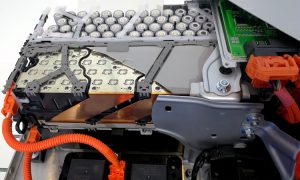
This action plan is built upon the “Future of the European Automotive Industry” strategic dialogue launched by the European Commission in January 2025. The initiative seeks to increase the competitiveness of European car manufacturers by encouraging cooperation, promoting targeted financing, and simplifying regulations. According to the public statement released by the European Commission, the €1.8 billion investment will focus on creating a competitive supply chain for electric vehicle battery raw materials, aiming to enhance the cost competitiveness of EV battery cells and components produced in the EU in the short term.
The plan also includes a “Battery Booster” package, which will provide direct funding and other forms of support for the production of electric vehicle battery cells and components. This package is designed to facilitate the scaling up of production in Europe, ensuring that the region can keep pace with the global demand for electric vehicles.
In addition to financial support, the European Commission plans to introduce related legislation in 2025 that will set requirements for the local content of electric vehicle batteries and components. This legislation will ensure that EU manufacturers rely more on locally sourced materials, reducing dependency on external supply chains and helping secure the region’s long-term competitiveness.
The focus on electric vehicle battery raw materials is essential, as these materials are the backbone of the EV industry. With the EU striving to become a global leader in green technologies, this initiative will help position the region at the forefront of the electric vehicle market by addressing supply chain challenges and enabling the local production of critical components.
The European Commission’s action plan is not only a boost to the EV sector but also aims to support the broader goal of Europe’s green transition. By focusing on electric vehicle battery raw materials, the EU is ensuring a sustainable future for the automotive industry, fostering technological innovation, and contributing to global efforts to combat climate change.
Related news:
On March 12th, Northvolt, the largest battery company in Europe and a Swedish power battery company, announced on its official website that it has filed for bankruptcy in Sweden due to running out of cash.
Our metal extractants as below, if you need any kind, please ask us:
- P204 (D2EHPA or HDEHP) This is used for first step to remove impurity for laterite nickel ore.
- DY319 high efficiency nickel cobalt co-extraction extractant for battery recycle, can take out nickel and cobalt together from Lithium battery electrolyte.
- DY272 Nickel cobalt separation extractant, it can take cobalt out from nickel cobalt solution, then leave pure nickel.
- DY988N/DY973N/DY902/DY5640 copper solvent extraction reagent.
- P507 non-ferrous metal extractant for copper, zinc, cobalt-nickel, cadmium, gold-silver, platinum group metals, rare earths and so on.
- DY377 efficient nickel and diamond separation extractant.
- DY366 Scandium extractant.
- DY316 Lithium extractant.