
 English
 العربية
 azərbaycan dili
 বাংলা
বাংলা Français
 Deutsch
 Indonesia
 한국어
한국어 Melayu
 پارسی
پارسی Polski
 Português
 Română
 Русский
 Español
 Kiswahili
 ภาษาไทย
 Türkçe
 Українська
 اردو
اردو Tiếng Việt
Hydrometallurgy extractant is used for extracting non-ferrous metals from their ores or solutions using liquid reagents, like copper, nickel, cobalt, lithium, zinc and rare earths etc. An essential part of this process is the selection of an appropriate extractant that can selectively bind to the target metal ions, in contrast to other impurities present in the solution, resulting in a high-purity final product. The choice of extractant plays a vital role in determining the success and efficiency of the extraction process.
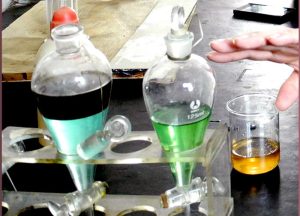
One of the factors affecting the choice of Hydrometallurgy extractant is the type of metal to be extracted. Different metals require specific extractants that can selectively bind to them. For instance, copper extraction often involves using acid extractants like DY984N, DY973N, DY902, and DY5640, while nickel and cobalt extraction require specialized extractants like P204 (D2EHPA or HDEHP) and DY272. Moreover, lithium battery materials extraction often makes use of DY319 extractant, while ion liquid extractant can extract a wide range of metals such as rare earth, lithium, vanadium, beryllium, and precious metals including platinum, iridium, osmium, ruthenium, palladium, and rhodium.
Another factor influencing the choice of extractant is the concentration and composition of the metal in the ore or solution, which will affect the efficiency of the extraction process. For instance, if the metal concentration is too low, a more selective extractant may be required, while if the concentration is too high, a less selective extractant may suffice. The presence of impurities and other metals in the solution also influences the choice of extractant. Some extractants, such as chelating agents, are more selective towards certain metals and can be used to avoid coextraction of other contaminants.
The pH and temperature of the solution also play a role in the choice of extractant. Certain extractants work better at specific pH values. For example, DY988N for copper extraction has a better extraction rate at a pH range of 2.5-3.5. Temperature can also affect the solubility of a metal in the solution and impact the performance of the extractant.
Finally, the desired purity of the final product also affects the choice of extractant. High-purity products require more selective extractants and a more complex extraction process. For instance, ion liquid extractants can achieve high purity and can be customized for specific applications as required by the consumer.
In conclusion, the selection of an appropriate extractant is critical to achieving high efficiency and cost-effectiveness in hydrometallurgical extraction processes. A well-chosen extractant will selectively bind to the target metal ions, avoiding impurities and coextraction of other metals. The type of metal, concentration and composition of the solution, presence of impurities, pH and temperature of the solution, and desired purity of the final product all affect the selection of the extractant. Companies that specialize in research and development of metal extraction reagents offer a wide variety of extractants tailored to specific applications, ensuring optimal results in hydrometallurgical processes.
Our metal extractants as below, if you need any kind, please ask us:
- P204 (D2EHPA or HDEHP) This is used for first step to remove impurity for laterite nickel ore.
- DY319 high efficiency nickel cobalt co-extraction extractant for battery recycle, can take out nickel and cobalt together from Lithium battery electrolyte.
- DY272 Nickel cobalt separation extractant, it can take cobalt out from nickel cobalt solution, then leave pure nickel.
- DY988N/DY973N/DY902/DY5640 copper solvent extraction reagent.
- P507 non-ferrous metal extractant for copper, zinc, cobalt-nickel, cadmium, gold-silver, platinum group metals, rare earths and so on.
- DY377 efficient nickel and diamond separation extractant.
- DY366 Scandium extractant.
- DY316 Lithium extractant.