 English
 العربية
 azərbaycan dili
 বাংলা
বাংলা Français
 Deutsch
 Indonesia
 한국어
한국어 Melayu
 پارسی
پارسی Polski
 Português
 Română
 Русский
 Español
 Kiswahili
 ภาษาไทย
 Türkçe
 Українська
 اردو
اردو Tiếng Việt
Title: Introduction of P204 extractant used in Malaysia market.
P204, also known as di-(2-ethylhexyl) phosphoric acid (DEHPA), is a widely used extractant in the field of chemical separations, particularly for the extraction and purification of metal ions from aqueous solutions. It is an organic compound that belongs to the class of phosphoric acid esters, which are known for their ability to form complexes with various metals through a process called solvent extraction. This makes P204 a crucial reagent in hydrometallurgy, nuclear chemistry, and analytical chemistry.
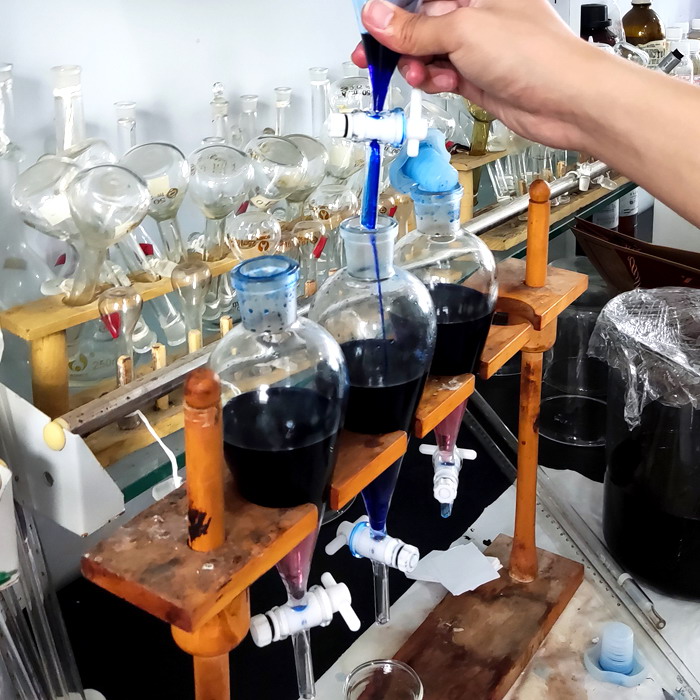
P204 is used for removing impurity form laterite nickel ore. We are manufacturer, this is our major production.

In Malaysia, the use of P204 is significant in several industries, including mining and mineral processing, where it is employed for the recovery of valuable metals such as uranium, rare earth elements, and other transition metals. The country has rich deposits of tin, copper, and gold, and the extractant plays a pivotal role in the extraction processes of these metals from ores.
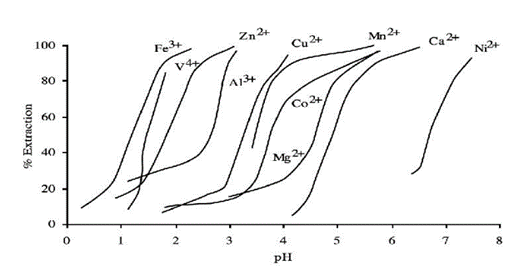
The effectiveness of P204 lies in its selective affinity towards certain metal ions over others, allowing for the separation of desired elements from impurities or other co-existing metals. This selectivity can be tuned by adjusting factors such as pH, temperature, and the concentration of the extractant and metal ions in the solution. The extraction mechanism typically involves the formation of a neutral complex between the metal ion and the P204 molecule, which is then transferred from the aqueous phase to an immiscible organic phase.
One of the key advantages of using P204 in industrial applications is its stability under a wide range of conditions. It can withstand high temperatures and is resistant to oxidation, which ensures its longevity and efficiency in metal extraction processes. Moreover, P204 is relatively inexpensive compared to other extractants, making it a cost-effective choice for large-scale operations.
However, like any chemical reagent, P204 must be handled with care due to its potential hazards. It can cause skin irritation and may pose risks if ingested or inhaled. Proper safety protocols and personal protective equipment are essential when working with this extractant.
In Malaysia, the demand for P204 is not only driven by domestic industries but also by the country’s role as a regional hub for chemical manufacturing and supply chains. The extractant is often supplied in bulk to various facilities across Southeast Asia, contributing to Malaysia’s position as a key player in the global chemical industry.
In summary, P204 is a critical component in the metal extraction processes used in Malaysia, offering high selectivity and stability for the purification and recovery of valuable metals. Its economic benefits and versatile application make it a preferred choice in various sectors, supporting the nation’s growth in the fields of mining, metallurgy, and chemical manufacturing.
We special to focus on R&D metal extraction reagents, our major products as below:
- P204 (D2EHPA or HDEHP) This is used for first step to remove impurity for laterite nickel ore.
- DY319 high efficiency nickel cobalt co-extraction extractant for battery recycle, can take out nickel and cobalt together from Lithium battery electrolyte.
- DY272 Nickel cobalt separation extractant, it can take cobalt out from nickel cobalt solution, then leave pure nickel.
- DY988N/DY973N/DY902/DY5640 copper solvent extraction reagent.
- P507 non-ferrous metal extractant for copper, zinc, cobalt-nickel, cadmium, gold-silver, platinum group metals, rare earths and so on.
- DY377 efficient nickel and diamond separation extractant.
- DY366 Scandium extractant.
- DY316 Lithium extractant.
Our R & D team always follow the market needs, not only developed nickel extractants in laterite Nickel ore, Rare earth extractants, Lithium extractants, Vanadium extractants, Beryllium extractants, Rare precious metals (Platinum Iridium Osmium Ruthenium, Palladium and Rhodium) extractants, but also work on Nuclear spent fuel extractants and related extractants in the field of waste battery recycling, always keep on the forefront of industry development.