
 English
 العربية
 azərbaycan dili
 বাংলা
বাংলা Français
 Deutsch
 Indonesia
 한국어
한국어 Melayu
 پارسی
پارسی Polski
 Português
 Română
 Русский
 Español
 Kiswahili
 ภาษาไทย
 Türkçe
 Українська
 اردو
اردو Tiếng Việt
N235 Tris(2-ethylhexyl)amine, CAS No. 68814-95-9, is a mixture of straight-chain C8 and C10 alkyl-substituted tertiary amines and one of the most widely used and representative amine extractants in the solvent extraction of rare earth elements. It plays a crucial role in the separation, concentration, and purification of rare earth elements from complex ores or industrial waste streams.
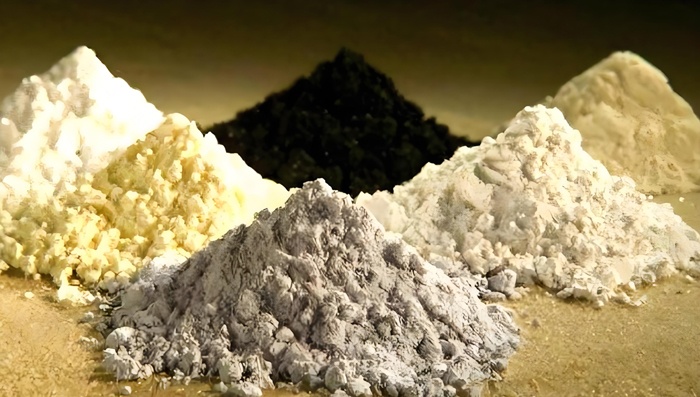
The application of N235 Tris(2-ethylhexyl)amine in Rare Earth Extraction is primarily based on an anion exchange mechanism. In acidic media, N235 first reacts with acids (such as HCl, H₂SO₄, HNO₃, etc.) to form amine salts—protonated tertiary amine cations. When an aqueous phase containing rare earth elements contacts an organic phase of N235 (typically diluted with sulfonated kerosene), rare earth anionic complexes in the aqueous phase (e.g., [RECl₄]⁻, [RE(NO₃)₄]⁻, where RE represents a rare earth element) undergo ion exchange with the protonated amine cations in the organic phase, forming ion-pair complexes soluble in the organic phase. This facilitates the transfer of rare earth elements from the aqueous to the organic phase. The extraction efficiency is significantly influenced by acidity, the type of rare earth ion, the nature of anions (Cl⁻, NO₃⁻, SO₄²⁻, etc.), and the presence of co-existing ions.
N235 Tris(2-ethylhexyl)amine exhibits differential selectivity for various rare earth elements. Generally, its extraction capacity for trivalent rare earth ions increases with atomic number, meaning it has a stronger affinity for heavy rare earths (e.g., Y, Dy, Er) than for light rare earths (e.g., La, Ce, Pr). This “anomalous” extraction order (opposite to that of many other extractants) gives N235 a unique advantage in separating heavy from light rare earths. Additionally, N235 strongly extracts certain non-rare earth impurity ions (such as Fe³⁺, Th⁴⁺, Zr⁴⁺), making it effective for preliminary purification of rare earth feed solutions by removing these interfering metals.
In industrial practice, N235 Tris(2-ethylhexyl)amine is often combined with other extractants (like P204 or P507) to form synergistic systems or used in specific separation steps—for instance, recovering rare earths from phosphoric acid leachates, separating rare earths from neodymium-iron-boron scrap leach solutions, or treating rare earth-containing industrial wastewater. Its advantages include relatively low cost, good chemical stability, and high extraction capacity. However, N235 also has drawbacks such as high viscosity, a tendency to emulsify or form a third phase; thus, phase modifiers (e.g., isooctanol) are often added, and process conditions carefully optimized.
In summary, as a classic tertiary amine extractant, N235 Tris(2-ethylhexyl)amine holds an irreplaceable position in rare earth separation and purification. Its well-established application and extensive research base continue to support the efficient and clean utilization of rare earth resources.
Our metal extractants as below, if you need any kind, please ask us:
- P204 (D2EHPA or HDEHP) This is used for first step to remove impurity for laterite nickel ore.
- DY319 high efficiency nickel cobalt co-extraction extractant for battery recycle, can take out nickel and cobalt together from Lithium battery electrolyte.
- DY272 Nickel cobalt separation extractant, it can take cobalt out from nickel cobalt solution, then leave pure nickel.
- DY988N/DY973N/DY902/DY5640 copper solvent extraction reagent.
- P507 non-ferrous metal extractant for copper, zinc, cobalt-nickel, cadmium, gold-silver, platinum group metals, rare earths and so on.
- DY377 efficient nickel and diamond separation extractant.
- DY366 Scandium extractant.
- DY316 Lithium extractant.