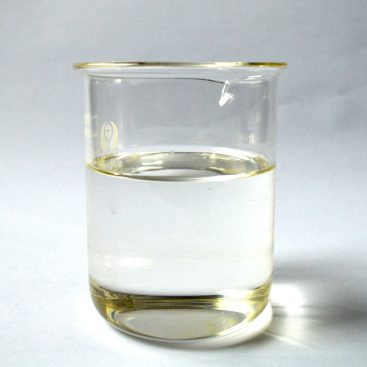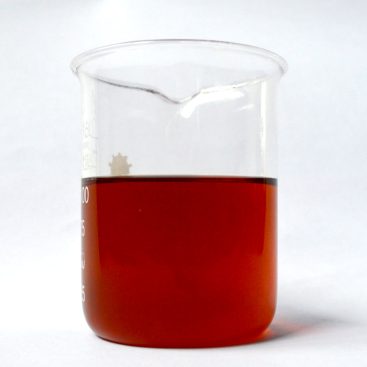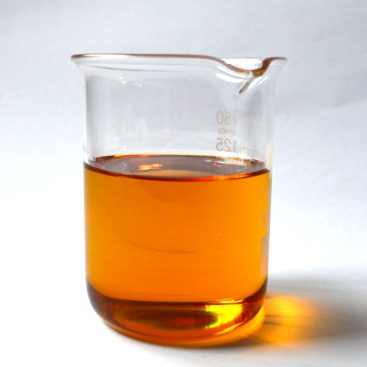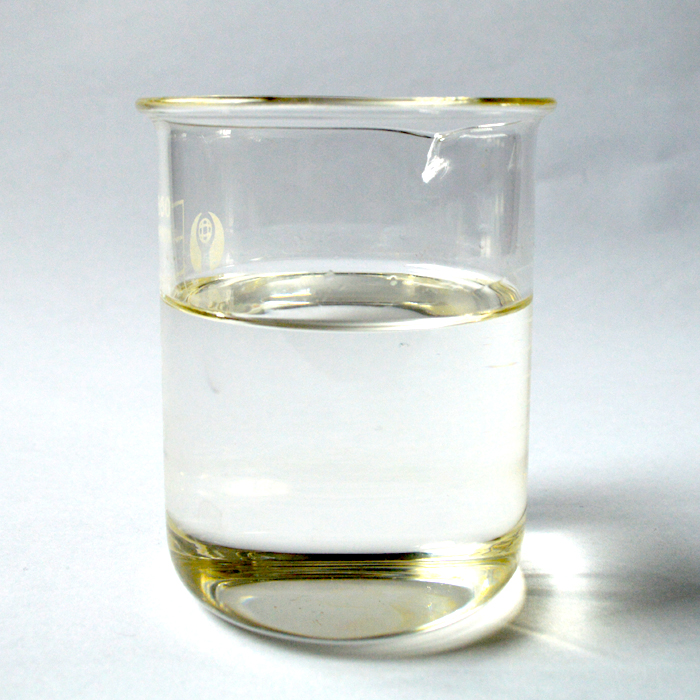
Bis(2,4,4-trimethylpentyl)phosphinic acid is an organophosphorus compound with significant applications in research and industry, particularly as an extractant and a ligand.
Here is a comprehensive overview of its key specifications:
CAS: 83411-71-6
EC No.: 280-445-7
Formula: C16H35O2P
Mol. wt.: 290.42
Concentration: ≥94%
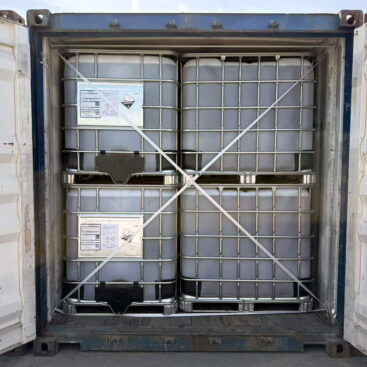
UN number: 3082
Transport Hazard class: 9
Packing group: III
📋 General Information
CAS Number: There are two CAS numbers associated with this substance in the literature: 83411-71-6 and 27661-42-3.
Molecular Formula: C₁₆H₃₅O₂P
Molecular Weight: 290.42 g/mol
Synonyms: Diisooctylphosphinic acid, Cyanex 272, Ionquest 290.
⚗️ Physical and Chemical Properties
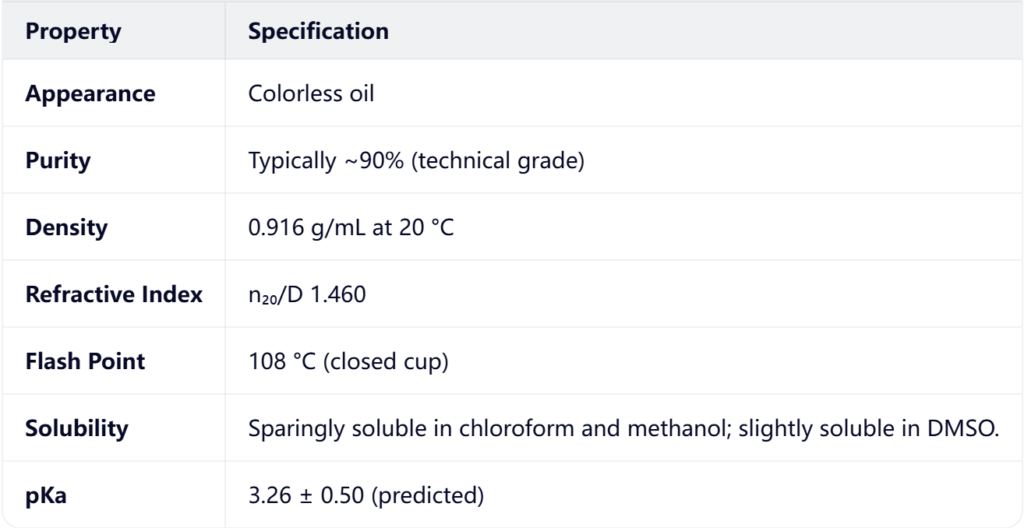
The following table summarizes the key physical and chemical properties of Bis(2,4,4-trimethylpentyl)phosphinic acid.
🧪 Applications
Bis(2,4,4-trimethylpentyl)phosphinic acid is a versatile reagent used in various specialized fields:
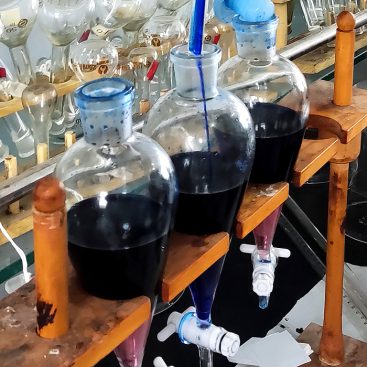
Solvent Extraction: It is widely used as an acidic extractant for the separation and recovery of metal ions, such as Indium(III) and other divalent metals (e.g., Zn²⁺, Cu²⁺, Pb²⁺).
Nanomaterial Synthesis: It serves as a surface-passivating ligand in the synthesis of “magic-size” nanocrystals, such as CdSe and CdTe.
Supercritical Fluid Extraction (SFE): The compound acts as an acidic ligand to facilitate the extraction of metals from matrices like sand and fly ash using supercritical CO₂.
⚠️ Safety and Handling
When handling this chemical, it is crucial to follow proper safety protocols.
Hazard Classification: It is classified as an Eye Irritant (Category 2).
Hazard Statement: Causes serious eye irritation (H319).
Precautionary Statements:
Wear protective gloves and eye/face protection.
IF IN EYES: Rinse cautiously with water for several minutes. Remove contact lenses, if present and easy to do. Continue rinsing.
Storage: Store at room temperature in a sealed container. It is considered a combustible liquid.
Our metal extractants as below, if you need any kind, please ask us:
- P204 (D2EHPA or HDEHP) This is used for first step to remove impurity for laterite nickel ore.
- DY319 high efficiency nickel cobalt co-extraction extractant for battery recycle, can take out nickel and cobalt together from Lithium battery electrolyte.
- DY272 Nickel cobalt separation extractant, it can take cobalt out from nickel cobalt solution, then leave pure nickel.
- DY988N/DY973N/DY902/DY5640 copper solvent extraction reagent.
- P507 non-ferrous metal extractant for copper, zinc, cobalt-nickel, cadmium, gold-silver, platinum group metals, rare earths and so on.
- DY377 efficient nickel and diamond separation extractant.
- DY366 Scandium extractant.
- DY316 Lithium extractant.
- DY-SS-01 extractant for iron, calcium, cadmium and scandium at different pH values.