
 English
 العربية
 azərbaycan dili
 বাংলা
বাংলা Français
 Deutsch
 Indonesia
 한국어
한국어 Melayu
 پارسی
پارسی Polski
 Português
 Română
 Русский
 Español
 Kiswahili
 ภาษาไทย
 Türkçe
 Українська
 اردو
اردو Tiếng Việt
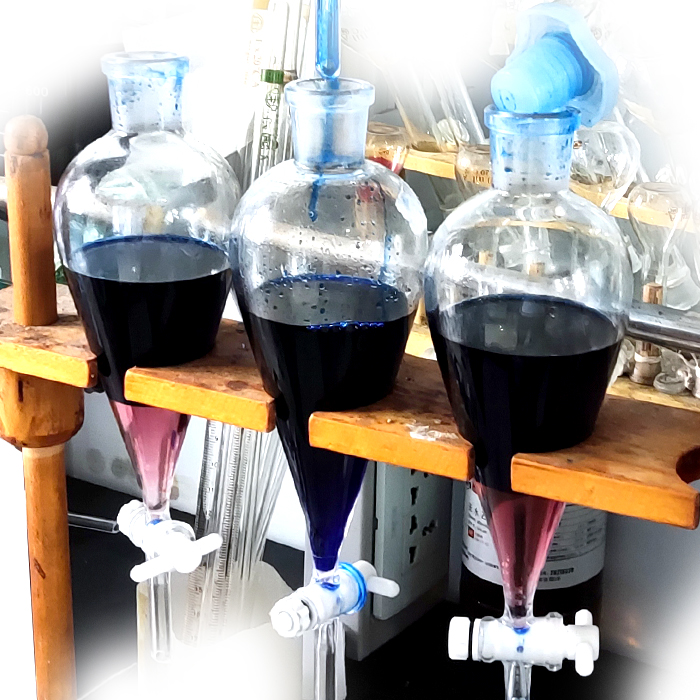
Cobalt extractant is chemical agent used to separate cobalt from other metals in various industrial applications, particularly in hydrometallurgical processes. These extractants play a crucial role in the extraction of cobalt from ores and other mineral sources, where cobalt is often present as a minor component in complex mineral matrices. The extraction process typically involves solvent extraction, a method widely used in the mining industry to recover valuable metals from ores, concentrates, or waste streams.
Key Features of Cobalt Extractant:
- Composition and Types: Cobalt extractant is generally organic compounds, and they belong to various classes of chemicals, such as phosphoric acid esters, hydroxyoximes, and amines. The most commonly used cobalt extractants include aldoximes and ketoximes, which are organic chemicals capable of selectively binding with cobalt ions, thereby facilitating their separation from other elements like nickel, copper, or iron. These extractants can be dissolved in an organic solvent such as kerosene, xylene, or other petroleum-based products.
- Mechanism of Extraction: The process of cobalt extraction involves a chemical reaction where cobalt ions (Co²⁺) are transferred from an aqueous solution into an organic phase, where they form a complex with the extractant. This is typically done through solvent extraction or liquid-liquid extraction, where the aqueous phase contains the metal ions to be extracted, and the organic phase contains the extractant. The cobalt complex is then separated from the aqueous solution, and the cobalt is later recovered by stripping it from the organic phase using an acidic solution or another method.
- Selectivity and Efficiency: One of the key benefits of using cobalt extractants is their high selectivity. They are designed to preferentially extract cobalt from a mixture of metals, which is particularly important in ores that contain multiple base metals. Cobalt extractants can often selectively separate cobalt even in the presence of other elements like nickel or copper, which is a significant advantage in processing ores with complex mineralogy. Their efficiency can be enhanced by adjusting parameters such as pH, temperature, and concentration of the extractant.
- Applications: Cobalt extractant is primarily used in the following applications:
- Mining and Metallurgy: In hydrometallurgical processes, cobalt extractants are used to recover cobalt from ores and concentrates. The extraction of cobalt is often carried out alongside the extraction of other metals, like nickel, using a combination of different extractants and solvent extraction techniques.
- Battery Recycling: Cobalt is a key component in lithium-ion batteries, particularly in cathode materials. As such, cobalt extractants play a role in the recycling of spent batteries, where cobalt is separated from other metals in the battery components. This is vital for recovering valuable cobalt from waste streams and for ensuring the sustainability of battery production.
- Environmental Cleanup: Cobalt extractants are also used in environmental applications, such as the removal of cobalt from contaminated water or soil. In these cases, the extractants can be used to remove cobalt as a toxic metal or to recover it for industrial use, thereby reducing environmental pollution.
- Challenges and Limitations: Despite their usefulness, cobalt extractants also come with challenges. One of the major issues is their potential for environmental impact. The organic solvents used in solvent extraction can be toxic or harmful if not managed properly, leading to concerns about the disposal and recycling of these chemicals. Additionally, the extraction process can be complex and require careful optimization of parameters to achieve the highest recovery rates with minimal impurities. Another challenge is the cost of the extractants, which can vary depending on the purity and complexity of the chemical compounds used. Some cobalt extractants may also suffer from reduced efficiency when dealing with ores that have high levels of impurities or when used in high-temperature or highly acidic environments.
- Future Developments: Research into improving the selectivity, efficiency, and environmental friendliness of cobalt extractants is ongoing. The development of more sustainable extractants, such as bio-based extractants or those that can be easily recycled, is a growing area of interest. Additionally, advancements in solvent extraction technologies, such as the use of ionic liquids or advanced membranes, are expected to make cobalt extraction more efficient and environmentally safe in the future.
Cobalt extractant enabling the efficient recovery of cobalt from complex ores and other sources. With their ability to selectively extract cobalt, they are indispensable for processes like solvent extraction and battery recycling.
Our metal extractants as below, if you need any kind, please ask us:
- P204 (D2EHPA or HDEHP) This is used for first step to remove impurity for laterite nickel ore.
- DY319 high efficiency nickel cobalt co-extraction extractant for battery recycle, can take out nickel and cobalt together from Lithium battery electrolyte.
- DY272 Nickel cobalt separation extractant, it can take cobalt out from nickel cobalt solution, then leave pure nickel.
- DY988N/DY973N/DY902/DY5640 copper solvent extraction reagent.
- P507 non-ferrous metal extractant for copper, zinc, cobalt-nickel, cadmium, gold-silver, platinum group metals, rare earths and so on.
- DY377 efficient nickel and diamond separation extractant.
- DY366 Scandium extractant.
- DY316 Lithium extractant.