
 English
 العربية
 azərbaycan dili
 বাংলা
বাংলা Français
 Deutsch
 Indonesia
 한국어
한국어 Melayu
 پارسی
پارسی Polski
 Português
 Română
 Русский
 Español
 Kiswahili
 ภาษาไทย
 Türkçe
 Українська
 اردو
اردو Tiếng Việt
In 2026, with the explosive construction of artificial intelligence (AI) data centers, the global wave of power grid upgrades, and the continuous penetration of the new energy vehicle industry, the demand structure for copper has undergone fundamental changes. As a core chemical additive in wet metallurgy (SX-EW), copper extraction agent plays an increasingly prominent strategic role. In 2026, the copper extractant industry is no longer just a supporting role in the chemical subdivisions, but a key link that determines the development efficiency of low-grade copper ores and affects the safety of copper supply chain.
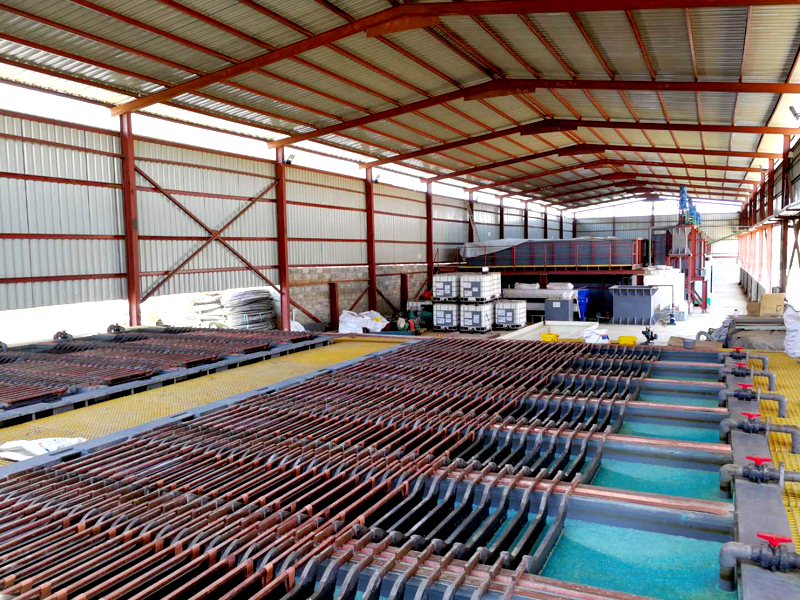
This article will delve into the core development trends of the copper extraction agent industry in 2026.
1、 Market driving force: the increase in penetration rate of wet copper smelting and the arrival of the “lean ore era”
1. Structural explosion on the demand side
The high energy consumption characteristics of data centers have forced large-scale expansion of the global power grid, and it is expected that the power grid infrastructure will contribute more than 60% of the copper demand growth.
As the average grade of mines decreases year by year, the use of hydrometallurgy to treat low-grade oxidized ores, mixed ores, and even tailings has become an inevitable choice.
2. The Rise of Wet Smelting (SX-EW)
In 2026, with increasingly stringent environmental regulations, the proportion of wet smelting in global copper production is expected to further expand.
2、 Technological Trends:
The competition for copper extraction agent technology in 2026 is no longer simply about capacity comparison, but focuses on precise design of molecular structures and environmental friendliness.
Iterative upgrade of hydroxime extractants
At present, hydroxides are still the absolute mainstream of copper extractants, mainly divided into two categories: aldehyde oximes and ketone oximes.
High selectivity formula: For complex mineral samples (such as leachate with high iron, calcium, and magnesium content), the mainstream trend in 2026 is to use compound extractants. For example, by utilizing the synergistic effect of DY5640 (aldoxime) and DY984N (ketoxime/aldoxime mixture), the kinetic or thermodynamic shortcomings of a single extractant can be solved, achieving efficient separation of copper and iron separation coefficients.
Despite the broad prospects, the copper extraction agent industry still faces challenges in 2026:
Fluctuations in raw material prices: The upstream of extractants relies on petrochemical products (such as phenol, dodecylbenzene, etc.), and fluctuations in crude oil prices directly affect cost control.
Extreme working condition adaptation: With the increase of mining depth and the complexity of mineral types (such as high mud ore and high chloride ore), the anti emulsification ability and phase separation speed of extractants are facing extreme challenges.
2026 is a crucial year for the high-quality development of the copper extraction agent industry. In the context of copper resources being “poor, fine, and miscellaneous”, copper extractants are the “golden key” for mining urban mines and activating low-grade resources.
Our metal extractants as below, if you need any kind, please ask us:
- P204 (D2EHPA or HDEHP) This is used for first step to remove impurity for laterite nickel ore.
- DY319 high efficiency nickel cobalt co-extraction extractant for battery recycle, can take out nickel and cobalt together from Lithium battery electrolyte.
- DY272 Nickel cobalt separation extractant, it can take cobalt out from nickel cobalt solution, then leave pure nickel.
- DY988N/DY973N/DY902/DY5640 copper solvent extraction reagent.
- P507 non-ferrous metal extractant for copper, zinc, cobalt-nickel, cadmium, gold-silver, platinum group metals, rare earths and so on.
- DY377 efficient nickel and diamond separation extractant.
- DY366 Scandium extractant.
- DY316 Lithium extractant.
- DY-SS-01 extractant for iron, calcium, cadmium and scandium at different pH values.