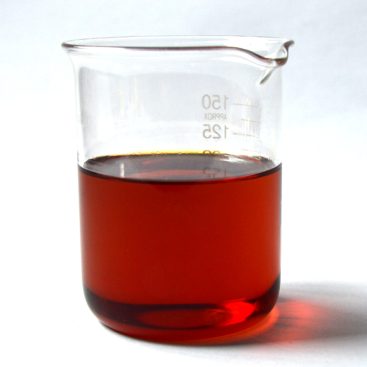
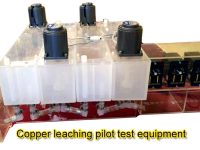
Copper Extractant Pilot Test Equipment: Specialized Solutions for Evaluating Copper Extractant Performance
In the mineral processing and hydrometallurgical industries, Copper Extractant Pilot Test Equipment plays a crucial role in evaluating the efficiency and effectiveness. These devices are designed to simulate real extraction conditions and assess the performance of different extractants under various parameters, such as concentration, temperature, and pH. By providing precise and reliable testing conditions, they help researchers optimize copper extraction processes, ensuring the highest recovery rates in mining and chemical industries.

What is Copper Extractant Pilot Test Equipment?
Copper Extractant Pilot Test Equipment is used to evaluate the effectiveness of copper extractants in separating copper from ores or concentrated mineral solutions. These tests typically measure extraction efficiency, selectivity, phase separation, and other factors influencing the success of the extraction process. The equipment allows researchers to replicate the specific chemical and physical conditions that might face in industrial applications, ensuring the accuracy of the test results.
Key Features of Copper Extractant Pilot Test Equipment
- Customizable Testing Conditions: By adjusting variables such as temperature, pH, solvent concentration, and stirring speed, the equipment can precisely simulate real-world copper extraction conditions. It can test a wide range of copper extractants and extraction techniques under realistic conditions.
- Comprehensive Extraction Performance Testing: The pilot equipment can be configured for a variety of tests related to copper extraction, including:
- Extraction Efficiency: Measuring the percentage of copper successfully extracted from ore or solution.
- Phase Separation: Evaluating the separation of copper metal phase from the aqueous phase, which is crucial for understanding the purity of the extracted copper.
- Selectivity: Testing the copper extractant’s ability to selectively extract copper over other metals, ensuring high-quality copper recovery.
- Extractant Reusability: Assessing the stability and reusability of copper extractants across multiple extraction cycles, which is important for cost-effectiveness.
- Advanced Stirring and Mixing Systems: Efficient stirring is essential to ensure thorough contact between the copper extractant and the solution. It can simulate mixing conditions in large-scale extraction operations, ensuring that the test results reflect real processing conditions.
- Real-Time Monitoring and Analysis: Allowing real-time monitoring of temperature, pH, concentration levels, and extraction rates. This enables continuous data collection, providing insights into the performance of the tested copper extractant.
Benefits of Copper Extractant Pilot Test Equipment
- Optimization of Copper Extraction Processes: By precisely simulating the conditions encountered in industrial copper extraction, the pilot equipment helps companies identify the most effective extractants and optimal copper recovery conditions. This leads to optimized processes, higher copper yields, and reduced operational costs.
- Improvement of Extractant Formulations: Testing under controlled conditions provides a better understanding of how different copper extractants behave. Researchers can fine-tune the extractant formulations to improve their performance in real extraction processes.
- Cost Savings and Enhanced Efficiency: The pilot test equipment helps reduce the trial-and-error process in industrial applications. By identifying the most effective copper extractant and optimizing the extraction process at the test stage, companies can lower operational costs associated with inefficient extraction techniques.
Applications of Copper Extractant Pilot Test Equipment
Copper Extractant Pilot Test Equipment is widely used in copper mining, hydrometallurgical processing, and chemical processing industries. It is particularly useful for:
- Copper Mining: Testing the effectiveness of extractants in leaching copper from ores and concentrates.
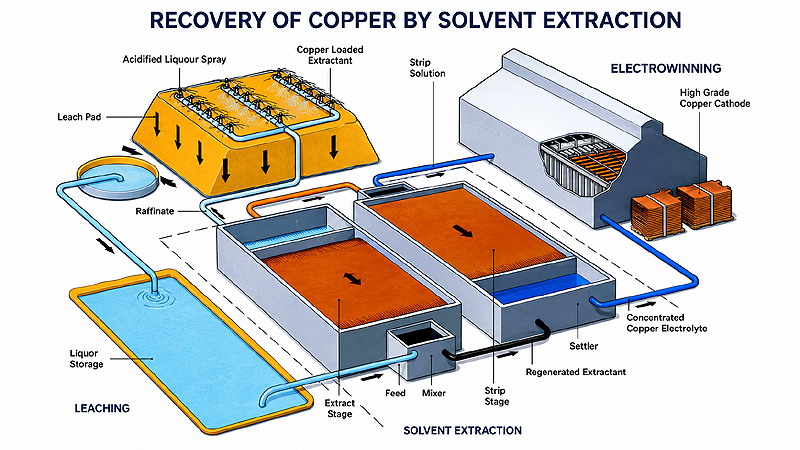
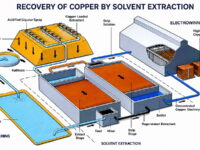
- Hydrometallurgical Processing: Evaluating the application of solvent extraction (SX) and electrowinning (EW) technologies in producing high-purity copper cathodes.
- Research and Development: Laboratories using pilot test equipment to develop new copper extractants and optimize extraction methods to improve yield, efficiency, and environmental impact.
- Recycling: Testing the effectiveness of extracting copper from electronic waste (e-waste) or scrap copper.
Conclusion
Copper Extractant Pilot Test Equipment is a key tool in optimizing copper extraction processes, it can ensure the effective performance of copper extractants. It can simulate a variety of real-world conditions, ensuring the development of cost-effective, sustainable, and high-performance copper extraction methods. It is a vital tool for advancing copper extraction processes and enhancing copper recovery.
We can custom all of below extractants pilot test equipments, if you need anyone, please ask us:
- P204 (D2EHPA or HDEHP) This is used for first step to remove impurity for laterite nickel ore.
- P507 non-ferrous metal extractant for copper, zinc, cobalt-nickel, cadmium, gold-silver, platinum group metals, rare earths and so on.
- DY272 Nickel cobalt separation extractant, it can take cobalt out from nickel cobalt solution, then leave pure nickel.
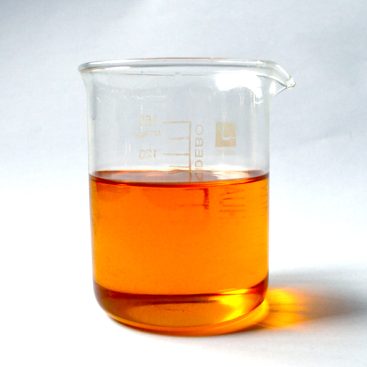
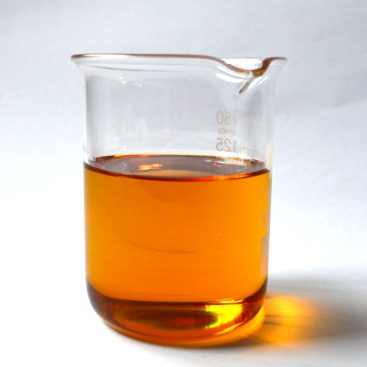
- DY984N copper solvent extraction reagent.
- QL256-2 Nickel Cobalt Manganese co extraction Extractant.
- DY316 Lithium extractant.
- DY319 high efficiency nickel cobalt co-extraction extractant for battery recycling, can take out nickel and cobalt together from Lithium battery electrolyte.
- DY366 Scandium extractant.
- DY377 efficient nickel and diamond separation extractant.