
 English
 العربية
 azərbaycan dili
 বাংলা
বাংলা Français
 Deutsch
 Indonesia
 한국어
한국어 Melayu
 پارسی
پارسی Polski
 Português
 Română
 Русский
 Español
 Kiswahili
 ภาษาไทย
 Türkçe
 Українська
 اردو
اردو Tiếng Việt
Nuclear fuel rod regeneration technology (commonly known as nuclear fuel reprocessing) does indeed involve various chemical separation methods, among which extraction is one of the core technologies. The following is a systematic description of this technology:
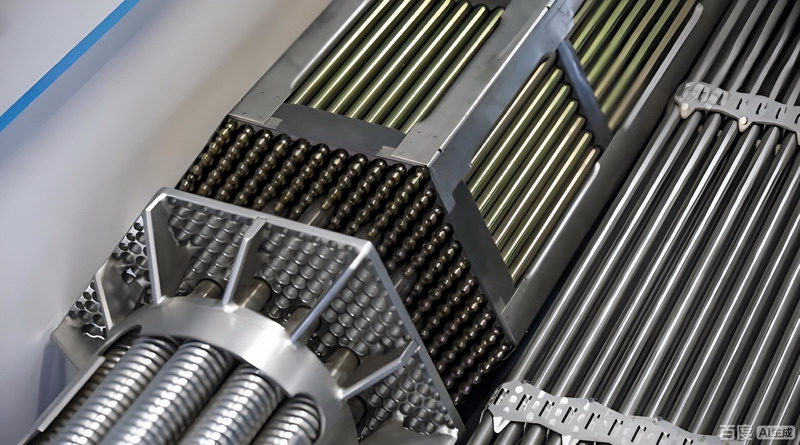
1. Purpose of Nuclear fuel rod regeneration technology
Spent fuel from a nuclear reactor still contains a large amount of valuable materials, mainly including:
• Unfissile uranium-235 (approximately 1%) and plutonium-239 (approximately 1%)
• Fissile nuclides (such as uranium-233, plutonium-241, etc.)
• Minor actinides and certain fission products
Through regeneration technology, these fissile materials can be recovered and reprocessed into fuel, improving uranium resource utilization and reducing the volume and toxicity of high-level waste.
2. Core Process of Extraction-Based Regeneration: PUREX Process
Currently, the most widely used industrial process is the PUREX process (Plutonium Uranium Recovery by Extraction). Its basic steps are as follows:
(1) Spent Fuel Dissolution
• After shearing the spent fuel assembly, it is dissolved in hot nitric acid, converting uranium, plutonium, and fission products into a nitrate solution.
(2) Extraction Separation
• 30% tributyl phosphate (TBP) dissolved in kerosene or tetrapropylene hydroxide (diluent) is used as the organic phase.
• The nitrate solution is mixed with the organic phase. Uranium (UO₂²⁺) and plutonium (Pu⁴⁺) form complexes with TBP and enter the organic phase, while most fission products (such as cesium, strontium, and rare earth elements) remain in the aqueous phase, achieving preliminary separation. (3) Back-extraction and Purification
• Uranium/Plutonium Separation: Plutonium is reduced to Pu³⁺ (not easily extracted by TBP) using a reducing agent (such as Fe²⁺, U⁴⁺, or hydroxylamine), causing it to transfer from the organic phase to the aqueous phase, while uranium remains in the organic phase.
• Uranium Back-extraction: Uranium is back-extracted from the organic phase using dilute nitric acid.
• Through multi-stage extraction and back-extraction, uranium and plutonium products with a purity of up to 99.9% can be obtained.
In summary, Nuclear fuel rod regeneration technology (reprocessing) via extraction is a mature chemical separation technology, with the PUREX process at its core. It holds significant value in improving nuclear resource utilization and reducing waste, but also faces challenges related to non-proliferation, economics, and waste management. Future development will focus on greater efficiency, non-proliferation, and waste minimization.
Our metal extractants as below, if you need any kind, please ask us:
- P204 (D2EHPA or HDEHP) This is used for first step to remove impurity for laterite nickel ore.
- DY319 high efficiency nickel cobalt co-extraction extractant for battery recycle, can take out nickel and cobalt together from Lithium battery electrolyte.
- DY272 Nickel cobalt separation extractant, it can take cobalt out from nickel cobalt solution, then leave pure nickel.
- DY988N/DY973N/DY902/DY5640 copper solvent extraction reagent.
- P507 non-ferrous metal extractant for copper, zinc, cobalt-nickel, cadmium, gold-silver, platinum group metals, rare earths and so on.
- DY377 efficient nickel and diamond separation extractant.
- DY366 Scandium extractant.
- DY316 Lithium extractant.
- DY-SS-01 extractant for iron, calcium, cadmium and scandium at different pH values.