
 English
 العربية
 azərbaycan dili
 বাংলা
বাংলা Français
 Deutsch
 Indonesia
 한국어
한국어 Melayu
 پارسی
پارسی Polski
 Português
 Română
 Русский
 Español
 Kiswahili
 ภาษาไทย
 Türkçe
 Українська
 اردو
اردو Tiếng Việt
P507 Extractant in Rare Earth Element Extraction, as 2-ethylhexylphosphonic acid mono-2-ethylhexyl ester, is currently the most widely used and technologically mature extractant in the rare earth hydrometallurgical industry both domestically and internationally. Its mainstream adoption is due to its superior overall performance compared to earlier extractants such as P204 extractant in several key aspects.
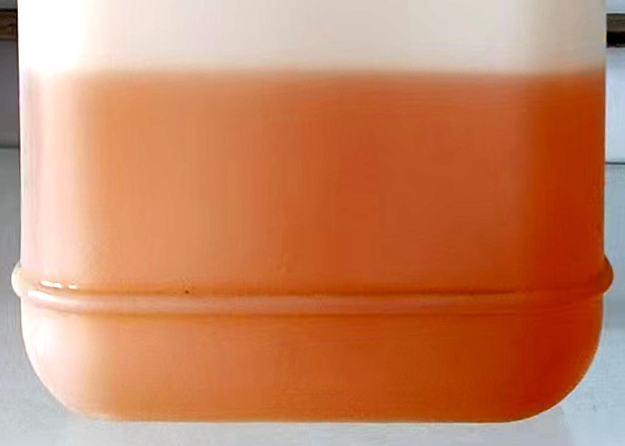
The following are the main advantages of P507 in rare earth extraction:
1. Excellent Separation Selectivity
This is P507’s core advantage.
• High Separation Factor: The separation factor (β) of P507 between adjacent heavy rare earth elements is significantly greater than that of P204. The separation factor is a key indicator of the ease with which an extractant separates two substances; a higher β value indicates better separation, fewer extraction stages required, and higher production efficiency.
• “Reverse-Sequence” Extraction Characteristics: Similar to P204, P507’s ability to extract rare earth ions increases with increasing atomic number, exhibiting “reverse-sequence” extraction (Lu³⁺ > Yb³⁺ > … > La³⁺). This allows it to highly efficiently separate complex rare earth mixtures into single, pure rare earth products. P507 exhibits particularly excellent separation performance for heavy rare earth elements with very similar chemical properties (such as holmium, erbium, thulium, ytterbium, and lutetium).
2. Good Chemical Stability and Physical Properties
• Acid and Hydrolysis Resistance: The carbon-phosphorus bonds (C-P) in the P507 molecule are more stable than the carbon-oxygen-phosphorus bonds (C-O-P) in P204, resulting in better acid and hydrolysis resistance. During long-term cyclic use, P507 is less prone to decomposition, has low loss, and a long service life, reducing production costs and environmental pollution risks.
• Suitable Viscosity and Density: P507 itself is an oily liquid with good miscibility with diluents (such as sulfonated kerosene). The resulting organic phase has suitable viscosity and flowability, facilitating thorough mixing and clarification separation with the aqueous phase in the extraction tank, ensuring mass transfer efficiency and operational stability.
3. Highly Efficient Extraction and Back-Extraction Performance
• High Extraction Capacity: P507 Extractant in Rare Earth Element Extraction has a high saturation loading capacity for rare earth ions, meaning that a unit volume of organic phase can hold more rare earth elements, increasing the equipment’s production capacity.
• Easy Back-Extraction: Although P507 is less acidic than P204, it can still be effectively back-extracted using common inorganic acids (such as hydrochloric acid) to “elute” the rare earth ions enriched in the organic phase, yielding a pure rare earth solution. The back-extraction conditions are relatively mild, easy to operate and control.
4. Comparative Advantages with P204 (Why Replace P204)
P204 is too acidic, resulting in a strong extraction capacity for non-rare earth impurities (such as calcium and magnesium). Furthermore, back-extracting heavy rare earth elements requires high-concentration acids, increasing operational difficulty and cost. P507, through adjustments to its molecular structure, achieves better selectivity and milder back-extraction conditions while maintaining sufficient extraction capacity. In industry, P507 is mainly used for:
1. Group separation: Separating mixed solutions after rare earth ore decomposition into light, medium, and heavy rare earth groups. For example, the classic “three-outlet” process can simultaneously obtain La/Ce/Pr/Nd, medium rare earth, and heavy rare earth concentrates.
2. Preparation of single high-purity rare earth elements: Especially used for the separation and purification of valuable heavy rare earth elements such as samarium (Sm), europium (Eu), gadolinium (Gd), terbium (Tb), dysprosium (Dy), holmium (Ho), erbium (Er), thulium (Tm), ytterbium (Yb), and lutetium (Lu).
3. Separation of yttrium (Y): P507 exhibits unique extraction behavior for yttrium (its position is between that of holmium and erbium), making it a key reagent for separating high-purity yttrium from other rare earth elements. In summary, the advantages of P507 extractant in rare earth element extraction can be summarized as follows:
• High selectivity: It can efficiently separate adjacent heavy rare earth elements with very similar chemical properties.
• Good stability: It is resistant to decomposition, has a long lifespan, and low operating costs.
• Balanced overall performance: It achieves an optimal balance in terms of extraction capacity, ease of back-extraction, and physical properties.
• Mature technology: Processes based on P507 have been developed over decades and have been widely adopted and optimized by the global rare earth industry, demonstrating extremely high reliability.
These outstanding characteristics have enabled P507 to quickly become the “ace” extractant in the rare earth separation industry since its development in the 1970s, a position it maintains to this day, laying a solid foundation for the development of the rare earth industry in China and globally.
Our metal extractants as below, if you need any kind, please ask us:
- P204 (D2EHPA or HDEHP) This is used for first step to remove impurity for laterite nickel ore.
- DY319 high efficiency nickel cobalt co-extraction extractant for battery recycle, can take out nickel and cobalt together from Lithium battery electrolyte.
- DY272 Nickel cobalt separation extractant, it can take cobalt out from nickel cobalt solution, then leave pure nickel.
- DY988N/DY973N/DY902/DY5640 copper solvent extraction reagent.
- P507 non-ferrous metal extractant for copper, zinc, cobalt-nickel, cadmium, gold-silver, platinum group metals, rare earths and so on.
- DY377 efficient nickel and diamond separation extractant.
- DY366 Scandium extractant.
- DY316 Lithium extractant.
- DY-SS-01 extractant for iron, calcium, cadmium and scandium at different pH values.