
 English
 العربية
 azərbaycan dili
 বাংলা
বাংলা Français
 Deutsch
 Indonesia
 한국어
한국어 Melayu
 پارسی
پارسی Polski
 Português
 Română
 Русский
 Español
 Kiswahili
 ภาษาไทย
 Türkçe
 Українська
 اردو
اردو Tiếng Việt
How to separate metals from Black mass of LCO and NMC?
Extraction of metals from the leach solutions of black mass derived from lithium-ion battery waste, such as lithium cobalt oxide/lithium nickel manganese cobalt oxide (LCO/NMC), lithium nickel manganese cobalt oxide (NMC), lithium iron phosphate (LFP), and other lithium-based cathode materials, is a crucial process in the recycling of lithium-ion batteries. This process typically involves solvent extraction (SX), which is used to separate valuable metals like lithium, cobalt, nickel, and manganese from the leach solutions.
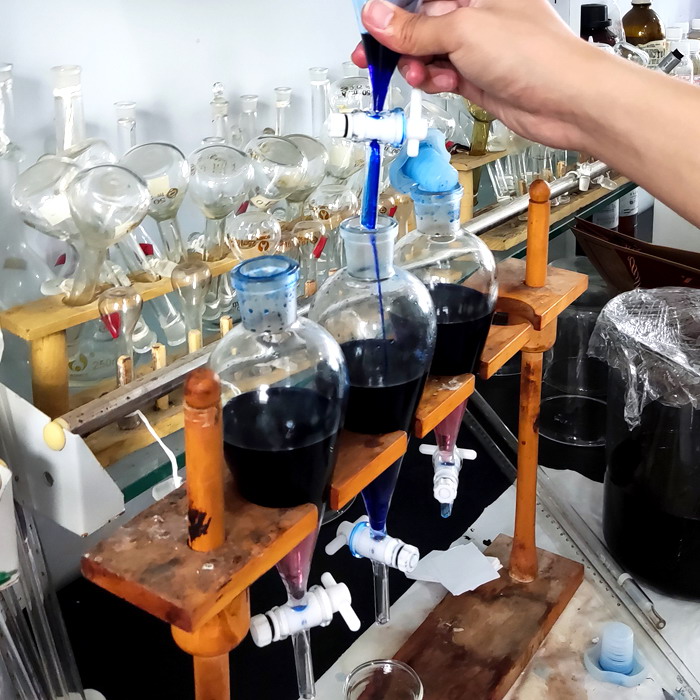
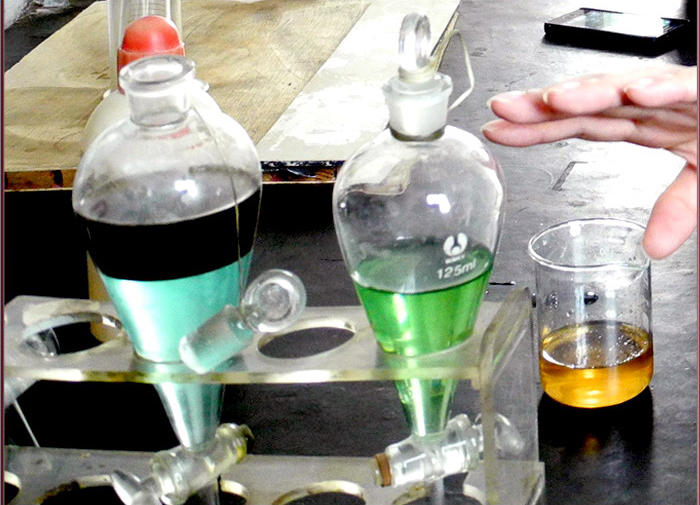
Below is an overview of the common solvents used in this extraction process:
DY272 (Phosphoric Acid Ester)
DY272 is widely used in the solvent extraction of cobalt and nickel from mixed metal solutions. It has a high selectivity for these metals, making it ideal for the separation of cobalt and nickel from other elements in the Black mass of LCO and NMC, such as lithium and manganese. DY272 works effectively by forming metal complexes with the metals in the leach solution, which can then be extracted into an organic phase.
– Applications: Primarily used for cobalt and nickel extraction.
– Benefits: High selectivity and efficiency for cobalt and nickel, particularly in the presence of other metals like manganese.
D2EHPA (Di-2-Ethylhexyl Phosphoric Acid)
D2EHPA is a phosphoric acid ester that is effective in the extraction of nickel and cobalt from leach solutions. It is particularly useful when dealing with mixed metal solutions and is often used to separate these metals from lithium and manganese. D2EHPA forms metal-organic complexes that are easy to extract into the organic phase.
– Applications: Widely used in nickel and cobalt extraction.
– Benefits: High selectivity and excellent phase separation, making it ideal for large-scale industrial processes.
Primary, Secondary extraction steps
Amine-based extractants, such as tri-n-octylamine (TOA) or primary amines, are commonly used for the extraction of lithium from leach solutions. In the case of NMC, tertiary amines may also be used to separate lithium from nickel, cobalt, and manganese in the leachate. These amines selectively bind to lithium ions and are typically used in combination with an organic solvent, often kerosene or mineral oil, to form an organic phase.
– Applications: Primarily for lithium extraction.
– Benefits: Highly selective for lithium, especially when separating it from other metals like nickel or cobalt.
Conclusion
The solvent extraction of metals from Black mass of LCO and NMC plays a pivotal role in the recycling of critical metals from spent lithium-ion batteries. Solvents like DY272, D2EHPA, and amines are commonly employed to selectively extract valuable metals such as cobalt, nickel, lithium, and manganese. Each solvent has its strengths in terms of selectivity, efficiency, and compatibility with the overall extraction process, making them key players in sustainable battery recycling technologies.
Our metal extractants as below:
- P204 (D2EHPA or HDEHP) This is used for first step to remove impurity for laterite nickel ore.
- DY319 high efficiency nickel cobalt co-extraction extractant for battery recycle, can take out nickel and cobalt together from Lithium battery electrolyte.
- DY272 Nickel cobalt separation extractant, it can take cobalt out from nickel cobalt solution, then leave pure nickel.
- DY988N/DY973N/DY902/DY5640 copper solvent extraction reagent.
- P507 non-ferrous metal extractant for copper, zinc, cobalt-nickel, cadmium, gold-silver, platinum group metals, rare earths and so on.
- DY377 efficient nickel and diamond separation extractant.
- DY366 Scandium extractant.
- DY316 Lithium extractant.