
 English
 العربية
 azərbaycan dili
 বাংলা
বাংলা Français
 Deutsch
 Indonesia
 한국어
한국어 Melayu
 پارسی
پارسی Polski
 Português
 Română
 Русский
 Español
 Kiswahili
 ภาษาไทย
 Türkçe
 Українська
 اردو
اردو Tiếng Việt
Some people like to use D2EHPA (P204), C 272 nickel cobalt extraction reagent (DY-272) and V10 to extract literate Nickel ore and separate Nickel and Cobalt, they think that V10 is a kind of America products, the quality should be very good. In fact, V10 is very easy to be dissolved by water, the consumption is very high, and the wastewater will have a lot of COD and TOC, it will be very difficult to be treated out, it means that the sewage will be unqualified.
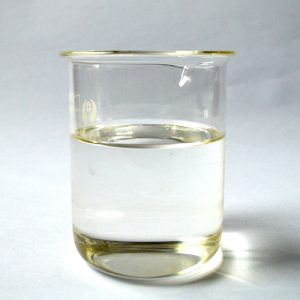
Before we had researched and developed DZ-Ni-EX01 & DZ-Ni-EX02, even it was advanced than old process of P204 and DY-272, but the process is complex too. Now we R&D DZ-Ni-EX03, only one kind extractant can extract Nickel and Cobalt out, also can separate them each other. The producing process will be saved much more, and the effect will be raised too much.
We can do the turnkey project for you, includes design the process, build the plant and supply the extractant. If you are interested, please submit your mineral components and tell us how much capacity that you want to invest, we’ll give you a suggestion and talk more about the details.
Please refer how to process laterite nickel or by C 272 nickel cobalt extraction reagent:
C 272 nickel cobalt extraction reagent is a widely used reagent in the solvent extraction of nickel and cobalt, particularly in hydrometallurgical processes. It is known for its high selectivity and efficiency in separating these metals from complex solutions, such as those derived from laterite ores or sulfuric acid leach liquors. Below is a detailed overview of its application and performance in nickel and cobalt extraction:
1. Selective Separation of Cobalt and Nickel
- C 272 nickel cobalt extraction reagent (bis(2,4,4-trimethylpentyl)phosphinic acid) is highly effective in separating cobalt from nickel. In a study using a Brazilian nickel lateritic liquor, C 272 nickel cobalt extraction reagent achieved a separation factor (βCo/Ni) of 697 at pH 4.5, significantly outperforming other extractants like D2EHPA.
- The reagent forms coordinate complexes with cobalt and nickel, with the molecular structure MR2(RH)2, where M represents the metal ion. This structure contributes to its high selectivity for cobalt over nickel.
2. Optimal Conditions for Extraction
- The extraction efficiency of C 272 nickel cobalt extraction reagent is influenced by pH, extractant concentration, and temperature. For instance, at pH 4.5 and a 15% v/v concentration of C 272 nickel cobalt extraction reagent, cobalt extraction is maximized while minimizing nickel co-extraction.
- In contrast, D2EHPA, another common extractant, shows higher affinity for manganese and calcium at lower pH levels, making C 272 nickel cobalt extraction reagent more suitable for cobalt-nickel separation in multi-metal systems.
3. Applications in Laterite Ore Processing
- C 272 nickel cobalt extraction reagent is used in the processing of nickel laterite ores, which are rich in nickel and cobalt but also contain impurities like iron, manganese, calcium, and magnesium. The reagent can be employed in staged extraction circuits, where D2EHPA is used first to remove iron and manganese, followed by C 272 nickel cobalt extraction reagent to separate cobalt and nickel.
- This two-stage process ensures high-purity cobalt and nickel streams, which are essential for battery manufacturing and other industrial applications.
4. Comparison with Other Extractants
- Compared to D2EHPA, C 272 nickel cobalt extraction reagent offers better selectivity for cobalt over nickel and is less prone to extracting calcium and magnesium, which are common impurities in laterite leach liquors.
- However, C 272 nickel cobalt extraction reagent is more expensive, which can be a limiting factor for large-scale industrial applications. In some cases, a mixture of C 272 nickel cobalt extraction reagent and Versatic 10 is used to balance cost and performance.
5. Environmental and Economic Considerations
- The use of C 272 nickel cobalt extraction reagent aligns with the growing demand for sustainable metal recovery processes, particularly in the context of electric vehicle battery production. Its ability to efficiently extract cobalt and nickel from low-grade ores contributes to resource conservation and reduced environmental impact.
- However, the reagent’s cost and the need for precise pH control during extraction are challenges that need to be addressed for broader adoption.
Summary
C 272 nickel cobalt extraction reagent is a highly effective reagent for the selective extraction of cobalt and nickel from complex solutions, particularly in the processing of laterite ores. Its high selectivity, combined with its ability to operate in staged extraction circuits, makes it a valuable tool in hydrometallurgy.
Our metal extractants as below, if you need any kind, please ask us:
- P204 (D2EHPA or HDEHP) This is used for first step to remove impurity for laterite nickel ore.
- DY319 high efficiency nickel cobalt co-extraction extractant for battery recycle, can take out nickel and cobalt together from Lithium battery electrolyte.
- DY272 Nickel cobalt separation extractant, it can take cobalt out from nickel cobalt solution, then leave pure nickel.
- DY988N/DY973N/DY902/DY5640 copper solvent extraction reagent.
- P507 non-ferrous metal extractant for copper, zinc, cobalt-nickel, cadmium, gold-silver, platinum group metals, rare earths and so on.
- DY377 efficient nickel and diamond separation extractant.
- DY366 Scandium extractant.
- DY316 Lithium extractant.