
 English
 العربية
 azərbaycan dili
 বাংলা
বাংলা Français
 Deutsch
 Indonesia
 한국어
한국어 Melayu
 پارسی
پارسی Polski
 Português
 Română
 Русский
 Español
 Kiswahili
 ภาษาไทย
 Türkçe
 Українська
 اردو
اردو Tiếng Việt
Cyclohexane acid is a naturally occurring mixed carboxylic acid in certain petroleum fractions, with its molecular structure mainly consisting of alkyl substituted fatty acids. In the solvent extraction and separation process of rare earth elements, cycloalkanoic acid has been studied and applied as an early and relatively simple extractant.
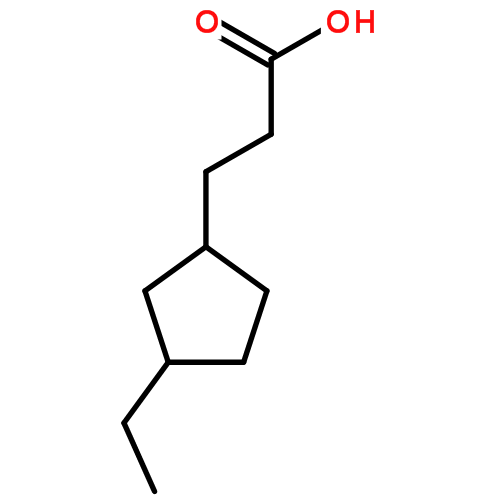
The following are the main application characteristics and situations of Cyclohexane acid in rare earth extraction:
1. As a cation exchange extractant:
Cyclohexane acid exists in the form of dimers in organic phases (usually diluents such as kerosene). When in contact with water containing rare earth ions, it can extract rare earth metal ions through cation exchange mechanism. The extraction reaction can be simplified as:
2HR (org) + RE³⁺ (aq) ⇌ RE R₃ (org) + 3H⁺ (aq)
Among them, HR represents cyclic acid, and RE ³ ⁺ represents trivalent rare earth ions.
2. Selectivity towards light rare earths:
Cyclohexane acid has a certain extraction ability for trivalent rare earth ions, but its selectivity is poor, especially for heavy rare earth elements with higher atomic numbers, with lower extraction efficiency. It tends to extract lighter rare earth elements such as lanthanum, cerium, praseodymium, and neodymium. This selectivity is due to the difference in ion radius caused by the “lanthanide contraction” effect, but the ability of cycloalkanoic acid to distinguish this difference is not as good as specially designed chelating extractants.
3. Application limitations:
Poor selectivity: This is the main problem with cycloalkanoic acids. It is difficult to achieve effective separation between adjacent rare earth elements and cannot meet the demand for high-purity single rare earth products.
Weak extraction ability: Compared with phosphorus extractants widely used in modern industry such as P507 (2-ethylhexyl phosphate mono-2-ethylhexyl ester) and P204 (di (2-ethylhexyl) phosphate), the extraction capacity and efficiency of cyclic acid are lower.
Unstable source and composition: Cycloalkanoic acid is a byproduct of petroleum, and its specific composition varies depending on the source of crude oil, resulting in unstable extraction performance and hindering standardized control in industrial production.
Emulsification and third phase issues: Under certain conditions, emulsification or the formation of a third phase can easily occur, affecting phase separation and operational stability.
4. History and Current Situation:
Cyclohexane acid was an extractant used in early research on rare earth extraction and was explored to some extent in the mid-20th century. However, due to the significant drawbacks mentioned above, it has not been widely applied in the modern large-scale rare earth separation industry. At present, almost all mainstream processes use phosphorus based acidic extractants (such as P507, P204) or neutral phosphorus oxygen extractants (such as TBP) with superior performance.
Cyclohexane acid can theoretically be used for the extraction of rare earth elements, especially with a certain affinity for light rare earths. However, due to its inherent defects such as poor selectivity, weak extraction ability, and unstable source, it has been eliminated in the actual rare earth separation industry and only has historical research value. Modern rare earth extraction processes rely on more efficient and selective specialized extractants.
Our metal extractants as below, if you need any kind, please ask us:
- P204 (D2EHPA or HDEHP) This is used for first step to remove impurity for laterite nickel ore.
- DY319 high efficiency nickel cobalt co-extraction extractant for battery recycle, can take out nickel and cobalt together from Lithium battery electrolyte.
- DY272 Nickel cobalt separation extractant, it can take cobalt out from nickel cobalt solution, then leave pure nickel.
- DY988N/DY973N/DY902/DY5640 copper solvent extraction reagent.
- P507 non-ferrous metal extractant for copper, zinc, cobalt-nickel, cadmium, gold-silver, platinum group metals, rare earths and so on.
- DY377 efficient nickel and diamond separation extractant.
- DY366 Scandium extractant.
- DY316 Lithium extractant.